Source slim dual screen laptop for Office, Education, and Design
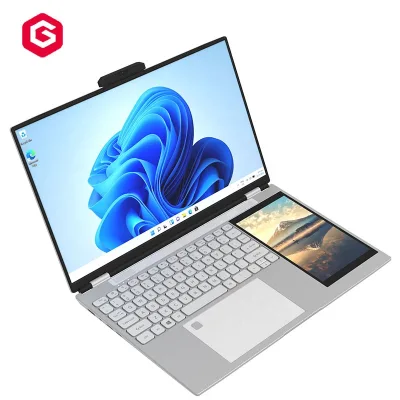
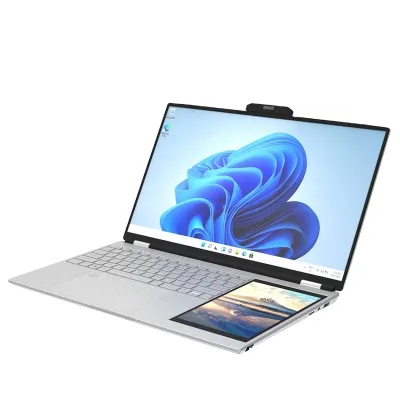
Explore 30 options for a slim dual screen laptop featuring Intel and AMD processors with Windows OS. Buyers can compare specifications including screen sizes from 13 to 15 inches, RAM capacities, and storage options to find the right device for professional needs.
Key considerations
Products List




Comprehensive Sourcing Guide
Strategic Sourcing Guide for Slim Dual Screen Laptop Procurement
Understanding the Technical Landscape of Dual Screen Configurations
The procurement of a slim dual screen laptop requires a nuanced understanding of the specific hardware configurations available in the current market. While the core keyword suggests a device with two displays, the supplied product data reveals a diverse ecosystem of specifications that buyers must navigate carefully. The term "slim" in this context often correlates with specific weight ranges and form factors. Observed data indicates that devices in this category can vary significantly in mass, with some units falling between 1.2 and 1.4 kg, while others exceed 2.0 kg. This variance is critical for logistics planning and user ergonomics, as a device intended for mobility must balance screen real estate with portability.
A primary technical observation involves the screen size and aspect ratio. The market data presents a mix of 13-inch, 14-inch, and 15-inch displays. While a 15-inch screen is noted as a common specification, the aspect ratio data presents a contradiction that buyers must resolve during the selection process. Some entries list a 1920*1080 resolution with a 4:3 display ratio, while others explicitly mention "Widescreen" or "Without Widescreen." In the context of dual-screen laptops, the 16:9 aspect ratio is the industry standard for widescreen configurations, whereas 4:3 is typically associated with older or specialized industrial displays. A buyer seeking a modern dual-screen experience must verify that the "Widescreen" attribute is present and that the resolution aligns with the physical dimensions to ensure optimal workflow efficiency.
The internal architecture of these devices is equally complex. The processor landscape includes AMD Athlon II and Intel Celeron variants, alongside mentions of Intel branding. This suggests a market segment that caters to both entry-level and mid-range performance needs. For a dual-screen setup, which inherently demands higher bandwidth for data transmission between displays, the processor choice is vital. The data also highlights a wide range of RAM capacities, from 4GB and above to specific configurations of 128GB, 256GB, 512GB, and 1TB. Similarly, memory capacity is listed as 8GB or 16GB, and hard disk options range from 500GB to 2TB. This disparity indicates that procurement strategies must be tailored to specific workload requirements; a general office application may suffice with 4GB RAM and a 500GB HDD, whereas a design or data-intensive dual-screen workflow would necessitate the higher-tier configurations.
Compliance, Certification, and Standard Verification
When sourcing dual-screen laptops, verifying compliance with international standards and local regulations is a non-negotiable step. The supplied product information references specific packing standards and physical dimensions, such as a standard of "444432" and a detailed dimension of "310.5x308.5x17.00mm." These figures likely represent packaging or chassis dimensions, which are essential for calculating shipping volumes and ensuring the product fits within standard logistics constraints. However, the absence of explicit certification data in the provided facts means that buyers cannot assume compliance with safety or environmental standards without direct verification from the supplier.
Buyers must actively seek confirmation regarding the origin of the products. The data indicates that goods originate from China, specifically noting Guangdong as a production hub. While this is a major manufacturing center, it necessitates a rigorous due diligence process to ensure that the manufacturing facilities adhere to the required labor and environmental standards of the buyer's region. The "Products Status" is listed as "New," which is a baseline requirement, but this does not guarantee that the manufacturing process meets specific ISO or IEC standards.
Furthermore, the product standards section mentions "444432" and "14 inches" as standard descriptors. In a procurement context, these should be treated as observations of specific models rather than universal industry standards. A buyer must verify if these dimensions align with the specific dual-screen configuration they require. For instance, a device with a "14 inches" standard might refer to the diagonal measurement of a single screen, which differs significantly from the total display area of a dual-screen unit. The verification process should include requesting test reports that confirm the structural integrity of the dual-screen hinge mechanism and the electromagnetic compatibility (EMC) of the device, ensuring it does not interfere with other office equipment.
Cost Drivers and Pricing Dynamics
The pricing structure for slim dual-screen laptops is influenced by a complex interplay of hardware specifications, customization options, and order volume. The observed price range in the market spans from $100 to $4,500 USD. This wide variance suggests that the cost is heavily dependent on the specific configuration selected. Entry-level models, likely featuring Intel Celeron processors, 4GB RAM, and 500GB storage, would fall at the lower end of this spectrum. Conversely, high-performance units with AMD processors, 1TB or 2TB storage, and advanced memory configurations could command prices approaching the upper limit.
The Minimum Order Quantity (MOQ) is another significant cost driver. The data indicates an MOQ range of 1 to 1,000 units. This flexibility allows buyers to scale their procurement based on immediate needs. A single-unit purchase might incur a higher per-unit cost due to the lack of economies of scale, while bulk orders of 1,000 units could significantly reduce the unit price. However, buyers must be aware that the "Customization: Available" attribute implies that bespoke configurations may carry a premium or require a higher MOQ to be economically viable.
Lead times and shipping costs are also critical factors that affect the total cost of ownership. While specific lead times are not provided in the data, the origin in Guangdong suggests that shipping times will vary based on the destination and the chosen logistics provider. The "prod_packing" is listed as both "Carton Box" and "Box," which indicates variability in packaging quality. High-quality packaging is essential for protecting delicate dual-screen mechanisms during transit, and the choice of packaging can impact the overall cost and risk of damage. Buyers should factor in the potential cost of insurance and the risk of product damage when calculating the total procurement budget.
Typical Applications and Use Cases
The versatility of slim dual-screen laptops makes them suitable for a wide array of professional applications. The data explicitly lists "Office" as a primary application, which encompasses general administrative tasks, data entry, and document management. In an office setting, the dual-screen configuration allows for the simultaneous viewing of reference materials and active workspaces, significantly boosting productivity. The "Built-in 3G Module" and "Built-in Bluetooth" attributes further enhance mobility, allowing users to stay connected in various environments without the need for external dongles.
Beyond general office work, the specifications suggest suitability for specialized roles. The presence of "Fingerprint" security features indicates that these devices are appropriate for handling sensitive data, making them viable for financial, legal, or healthcare sectors where data privacy is paramount. The "Mira Cast" support is particularly relevant for collaborative environments, enabling users to wirelessly project content from the laptop to external displays or projectors. This feature is invaluable for presentations and team meetings.
The weight and screen size data also point to specific use cases. Devices weighing between 1.2 and 1.4 kg are ideal for professionals who travel frequently, such as consultants or sales representatives, who need a portable yet powerful tool. In contrast, heavier units (over 2.0 kg) with larger screens (15 inches) might be better suited for stationary workstations or environments where mobility is less of a concern. The "Without Widescreen" attribute in some models suggests that certain configurations might be optimized for specific software that requires a 4:3 aspect ratio, such as legacy applications or specialized design tools.
Supplier Evaluation and Selection Criteria
Selecting the right supplier for slim dual-screen laptops requires a comprehensive evaluation of their capabilities, reliability, and product quality. The data indicates that suppliers offer a range of models with different processor types, RAM capacities, and storage options. Buyers should prioritize suppliers who can provide detailed technical documentation for each model, including the specific processor brand (Intel or AMD) and the exact RAM and storage configurations. The presence of multiple model numbers, such as "Dy112-AMD," "Y0304-049," and "Des-X13," suggests that suppliers have a diverse inventory, but buyers must ensure that the specific model meets their dual-screen requirements.
The "Customization: Available" attribute is a key differentiator. Suppliers who offer customization can tailor the hardware to specific needs, such as adding a 3G module or adjusting the RAM capacity. However, buyers must verify the lead time and cost implications of these customizations. Additionally, the "Products Status: New" ensures that buyers receive brand-new equipment, but they should also inquire about the warranty terms. The data mentions a "1 Year" warranty, which is a standard baseline, but buyers should confirm if this covers the dual-screen mechanism and if extended warranty options are available.
Geographic location is another factor in supplier evaluation. The origin is listed as China, with a specific mention of Guangdong. While this region is a manufacturing hub, buyers should assess the supplier's logistical capabilities and their experience in exporting to their specific region. The ability to provide reliable after-sales support and technical assistance is crucial, especially for complex devices like dual-screen laptops. Buyers should also request references from other clients who have purchased similar configurations to gauge the supplier's reliability and product quality.
Quality Control and Long-Term Procurement Considerations
Ensuring the quality of slim dual-screen laptops is paramount to the success of any procurement initiative. The data highlights various physical attributes, such as weight, screen size, and resolution, which serve as quality indicators. However, buyers must go beyond these basic specifications and implement a robust quality control (QC) process. This includes verifying the structural integrity of the dual-screen hinge, the responsiveness of the touch interfaces (if applicable), and the durability of the display panels. The "Weight" attribute, ranging from 1.2 kg to over 2.0 kg, should be verified against the actual product to ensure it matches the specifications provided.
Long-term procurement considerations involve planning for the lifecycle of the devices. The "1 Year" warranty is a starting point, but buyers should consider the total cost of ownership, including maintenance, repairs, and potential upgrades. The availability of spare parts, such as replacement screens or hinges, is critical for extending the lifespan of the devices. Additionally, the "Operating System: Windows" indicates a standard software environment, but buyers should verify compatibility with their existing IT infrastructure and software requirements.
The "Color" options, listed as Grey, Gray, and Pink, offer some aesthetic flexibility, but buyers should ensure that the color does not compromise the durability or finish of the device. The "prod_packing" being a "Carton Box" or "Box" suggests that packaging quality can vary, and buyers should specify packaging requirements to prevent damage during shipping. Finally, the "Built-in 3G Module" and "Built-in Bluetooth" features should be tested to ensure they function correctly and meet the connectivity needs of the organization. By addressing these quality control and long-term considerations, buyers can secure a reliable supply of slim dual-screen laptops that meet their operational needs.
Comparative Analysis of Key Specifications
To facilitate a clearer understanding of the available options, the following table summarizes the key specifications observed in the market data. This comparison highlights the diversity in configurations and helps buyers identify the most suitable models for their specific requirements.
| Specification | Observed Range/Options | Relevance to Dual-Screen Procurement |
|---|---|---|
| Processor Type | AMD Athlon II, Intel Celeron, Intel | Determines processing power for dual-display tasks. |
| RAM Capacity | ≥4GB, 8GB, 16GB, 128GB, 256GB, 512GB, 1TB | Critical for multitasking and performance stability. |
| Hard Disk | 500GB, 512GB, 1TB, 2TB | Storage capacity for large files and applications. |
| Screen Size | 13", 14", 15" | Affects portability and total display real estate. |
| Resolution | 1920*1080 | Ensures clarity and detail on both screens. |
| Weight | 1.2 | Impacts mobility and user comfort. |
| Connectivity | Built-in 3G (Yes/No), Built-in Bluetooth, WiFi | Essential for wireless connectivity and remote work. |
| Security | Fingerprint (Yes/No) | Important for data protection and access control. |
| Warranty | 1 Year | Standard coverage period for repairs and support. |
| Origin | China (Guangdong) | Influences shipping times and potential tariffs. |
This table serves as a reference point for buyers to evaluate the trade-offs between different models. It underscores the importance of aligning technical specifications with the intended use case to ensure optimal performance and value.
FAQs
What processor types are available for slim dual screen laptops?
Available processors include AMD Athlon II and Intel Celeron variants. Some models also feature Intel branding, catering to entry-level and mid-range performance needs for office applications.
Which screen sizes and resolutions are offered in this category?
Screen sizes range from 13 to 15 inches with a common resolution of 1920 by 1080. Buyers must verify if the device supports widescreen configurations or specific aspect ratios like 4:3.
Can I find models with built-in 3G modules and fingerprint security?
Yes, some units include built-in 3G modules and fingerprint sensors for enhanced security. Other models may lack these features, so specific configuration verification is required before purchase.
What is the weight range for these portable computing devices?
Weights vary significantly, with some units weighing between 1.2 and 1.4 kg while others exceed 2.0 kg. Lighter models are ideal for frequent travel, while heavier ones suit stationary workstations.
How much customization is available for memory and storage capacity?
Customization is available for RAM and storage, with options ranging from 4GB to 1TB or 2TB. Buyers can select from various memory capacities like 8GB or 16GB depending on their workflow requirements.
What warranty and product status should I expect for new units?
Products are listed as new with a standard one-year warranty. This baseline coverage applies to the device, though specific terms for dual-screen mechanisms should be confirmed with the supplier.